The back story
Wild Greek Islands: Monk Seals, Sea Turtles and the Kri-kri
Monk seals, nesting turtles and wild goats: the islands’ wild side.

Photo Credit
Image courtesy of © Wanax01 · CC BY-SA 4.0 via Wikimedia CommonsThe wild side of the Greek islands, from the Mediterranean monk seals of the Aegean and the loggerhead turtles that nest on Crete to the kri-kri of the Samaria Gorge and the protected beaches of Balos, Elafonisi and Vai, with a directory of the places in our guide. Facts from MOm, ARCHELON and the national park.
The Greek islands are best known for their light, their villages and their beaches, but they shelter some remarkable wildlife too. Mediterranean monk seals, among the rarest seals in the world, raise their pups in sea caves; loggerhead turtles come ashore on summer nights to lay their eggs on the sand; and in the White Mountains of Crete a wild goat, the kri-kri, picks its way along the cliffs.
This is a short guide: island wildlife is shy, and much of it is protected by law. See it with patience, from a respectful distance, and leave beaches, caves and dunes exactly as you found them.
Loggerhead turtles on Crete
Loggerhead sea turtles nest on the beaches of Crete each summer, in three main areas: Rethymno, Chania and Messara Bay in the south. ARCHELON, the Sea Turtle Protection Society of Greece, monitors and protects the nests there with volunteers, and says Crete holds the third-largest nesting population of the species in Greece.
Nests are often marked on the beach: give them a wide berth, keep beaches dark at night, and fill in holes and move sunbeds before you leave.

Photo Credit
Image courtesy of © Pierre mkrs · CC0 via Wikimedia Commons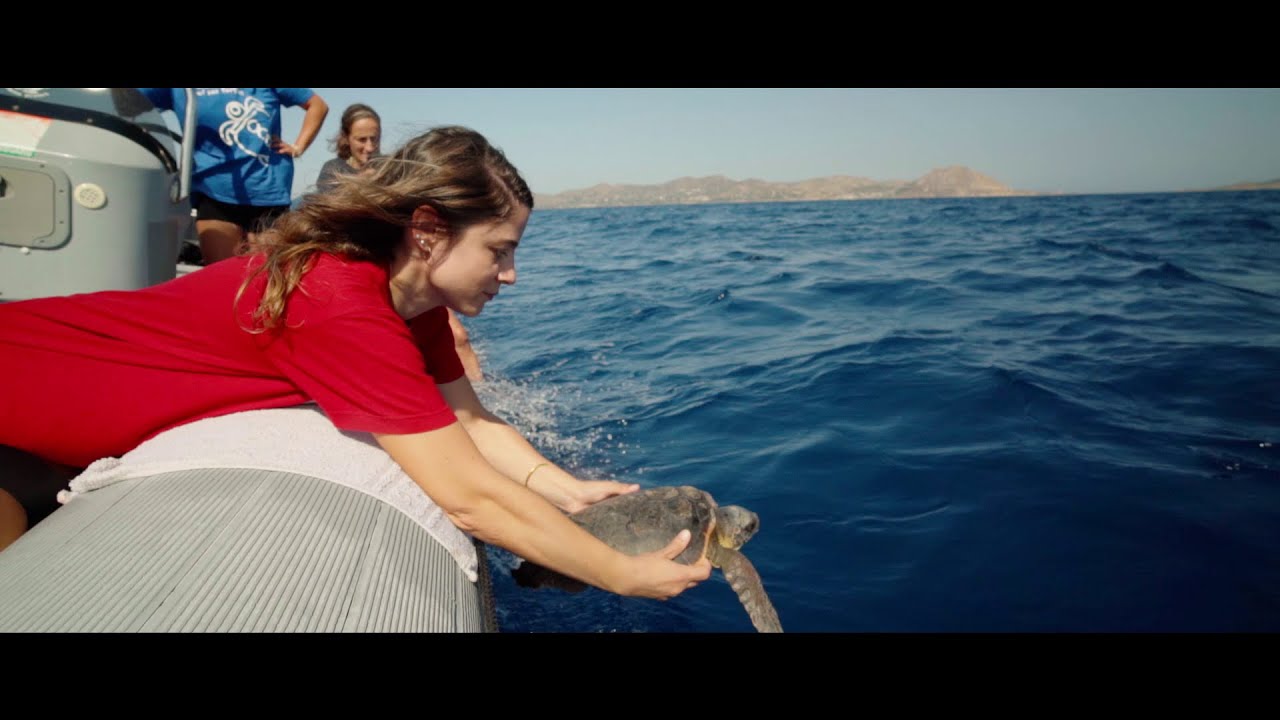
Video Credit
Video © ARCHELON Τhe Sea Turtle Protection Society · plays from YouTube, which may set its own cookies once it startsThe kri-kri and the Samaria Gorge
The Samaria Gorge was declared a national park in 1962, above all to protect the kri-kri, the Cretan wild goat, whose numbers had fallen dangerously low. The park is usually open from spring to autumn, depending on the weather. The classic hike starts at Xyloskalo on the Omalos plateau and descends through the gorge to the village of Agia Roumeli on the south coast, which has no road, so you leave by ferry. Keep an eye on the slopes above the path for the goats.

Photo Credit
Image courtesy of © Lapplaender · CC BY-SA 3.0 de via Wikimedia CommonsCrete’s protected shores are worth the journey too: the shallow lagoon of Balos below the Gramvousa peninsula, the nature reserve at Elafonisi, where the sand turns pink with tiny shell fragments, and Vai, a sandy bay fringed by a protected forest of native Cretan date palms.
Greece is home to the largest population of one of the rarest seals in the world.
Feature: the Mediterranean monk seal
The Mediterranean monk seal is one of the rarest seals on earth, and Greece is its stronghold. MOm, the Hellenic Society for the Study and Protection of the Monk Seal, says the country has the largest population of the species, and that the largest Greek colony lives on Gyaros, in the northern Cyclades. The seals rest and give birth in sea caves, so never enter a cave you see a seal in, and never approach, feed or swim towards one in the water.
Did you know? In February 2026 MOm reported the highest number of monk seal births in Greece in 40 years, including pups born in new breeding areas.
Our advice
Our advice: if you see a monk seal, watch quietly from a distance and report the sighting to MOm; never enter a sea cave where seals may be resting. On turtle beaches, respect marked nests, take your rubbish and leave no holes or sandcastles behind. Walk the Samaria Gorge early in the day with water and proper shoes, and check that the park is open. Don’t take sand or shells from protected beaches such as Elafonisi.
Why it's on our list
- Loggerhead turtles on Crete
- The kri-kri and the Samaria Gorge
- Feature: the Mediterranean monk seal
- Our advice
Location
The map comes from Google Maps, which sets its own cookies once it loads.
More in depth
 The back storyWhich Greek island is for you?Glamour, romance, nightlife, peace, food or history: how to match the islands to the trip you want.
 The back storyWhen to go to the Greek islandsMonth by month: sea temperature, the meltemi, crowds, prices and when islands open and close.
 The back storyMykonos: style, saints and the sacred island next doorThe most fashionable island in the Aegean, with a farming soul and Delos on the horizon.